Case Study — Saved Views
Save, organise and share viewer states of your 3D models
Info
Company
Speckle
Team
Benjamin Ottensten — Product Lead
Fabiāns Geikins — Full-stack Developer
Skills
Overview
Speckle is a Series A startup that connects the data of thousands of users working across architecture, engineering and construction.
Introducing collaboration features was one bet toward increasing revenue by growing the number of paid seats teams would get value from.
I worked end to end, leading the design, then building alongside the engineers to make sure the shipped product matched the intended experience.
01 — Problem
Value for the whole team
We were given the goal to convert more free workspace members to paid seats. Through our research, Saved Views started to feel like a solid bet to achieve this.
The app was powerful but skewed toward technical users, and giving anyone on a project a way to save and share exactly what they're looking at felt like a meaningful step toward closing that gap.
02 — Research
Listening to users
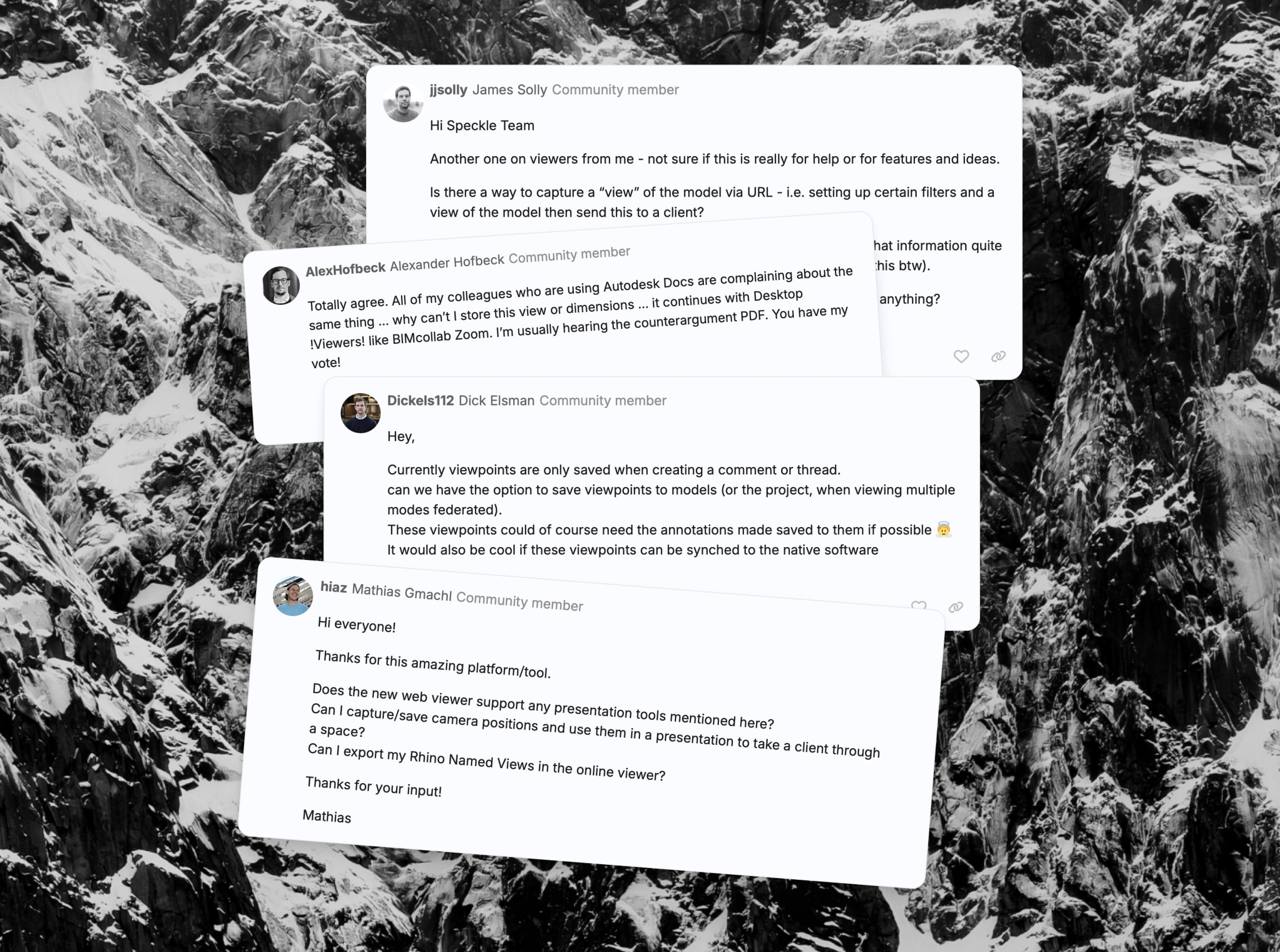
The community forum provided direct access to how users were thinking about features, and to learn more about users' needs I set up research interviews with a number of advocates.
Enthusiasm from one particular partner at a large global design firm was a strong signal, as adoption from them would be an impactful revenue lever.
The unusual workaround
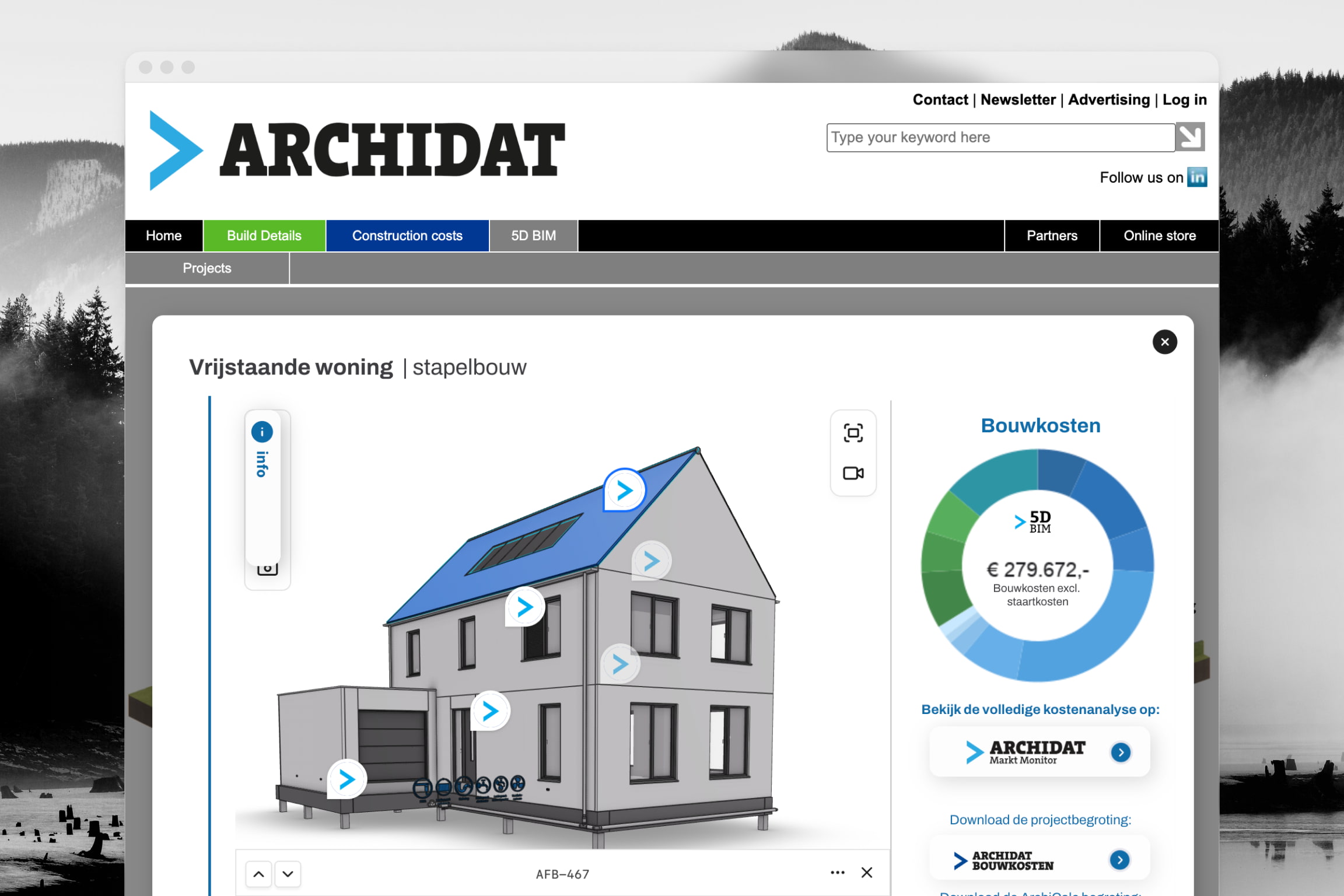
We discovered that some users had been exploiting the fact that comments capture camera state, using the Discussions feature as a makeshift saved-views system.
One user had even built it into their website, using a series of comments as navigation points.
It was clear that the feature had real user value.
Competitive landscape
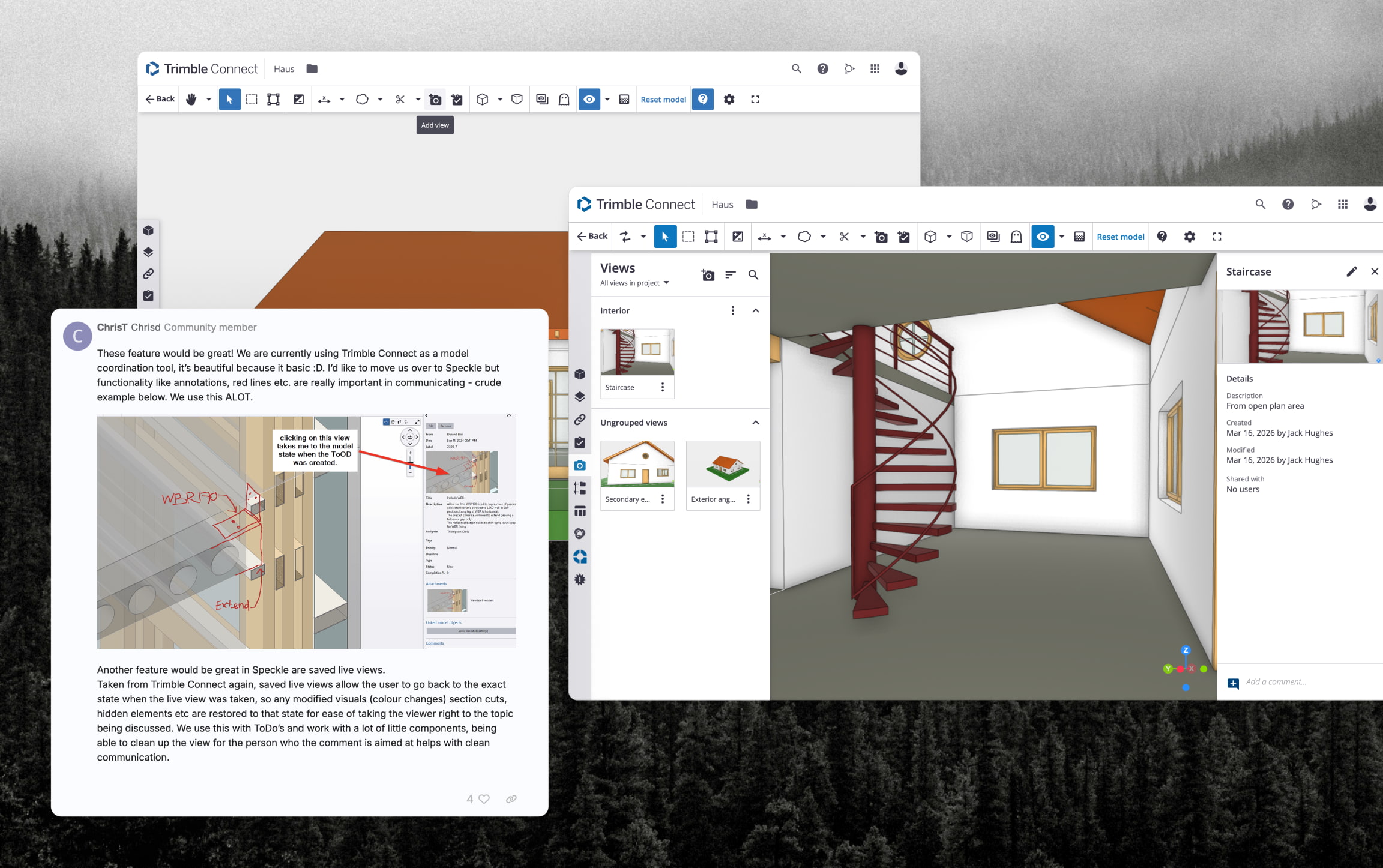
I reviewed how other tools in the space tackled the problem. Trimble Connect came up repeatedly in forum discussions, providing a useful reference point for user expectations.
Traditional AEC software sets a low bar for usability, so we were always looking for opportunities to deliver something that felt more modern and considered.
03 — Challenges
Piecing it together
The design of Saved Views was running parallel to a redesign of the broader viewer UI, with larger surfaces shifting around it.
This meant staying aligned with the other designer, but also offered an opportunity to inject my taste for clean, minimal simplicity into a part of the product that would reach a much wider audience.
Iterating through complexity
It's surprising when a proven UX pattern ends up being entirely unsuitable.
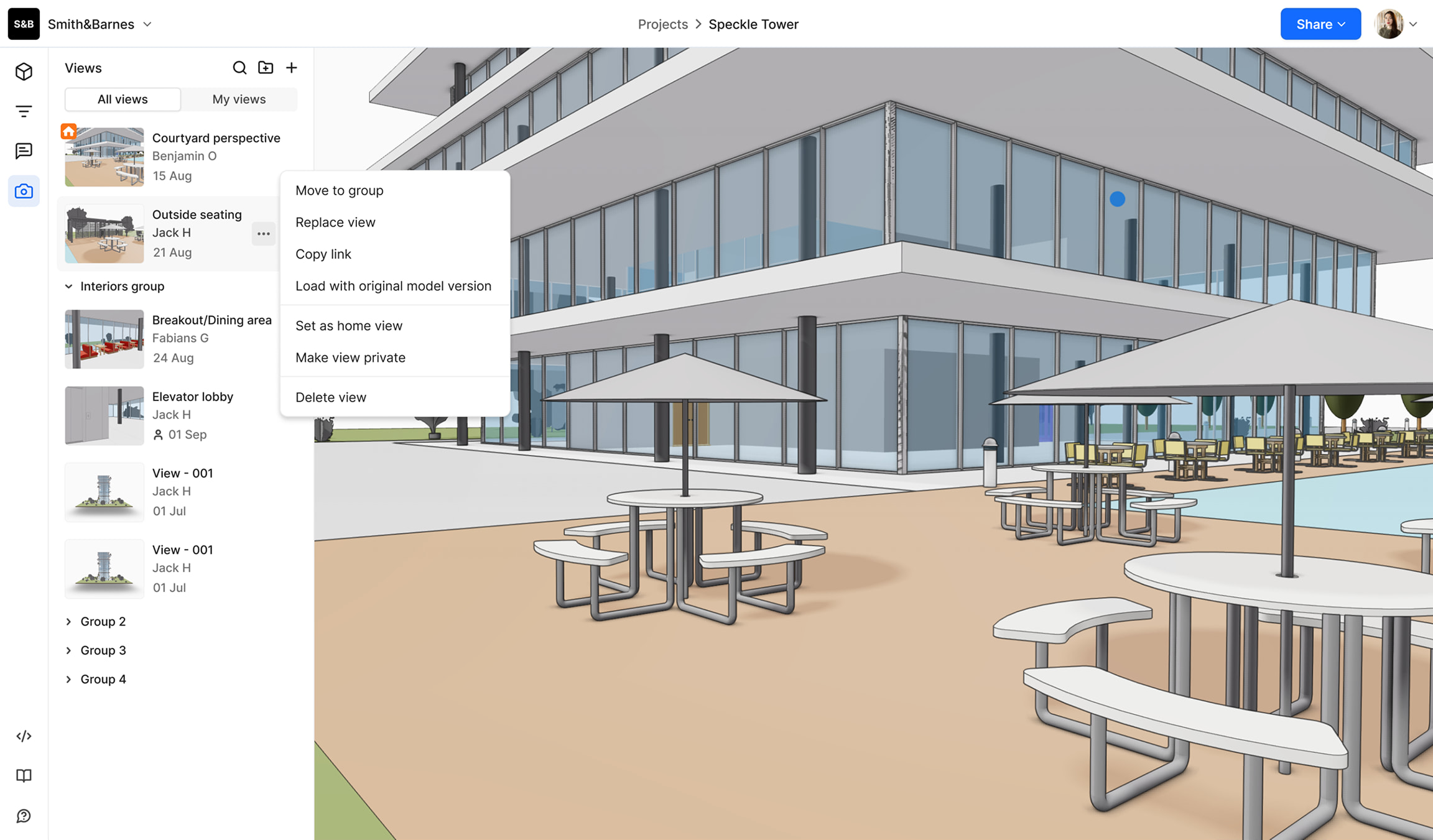
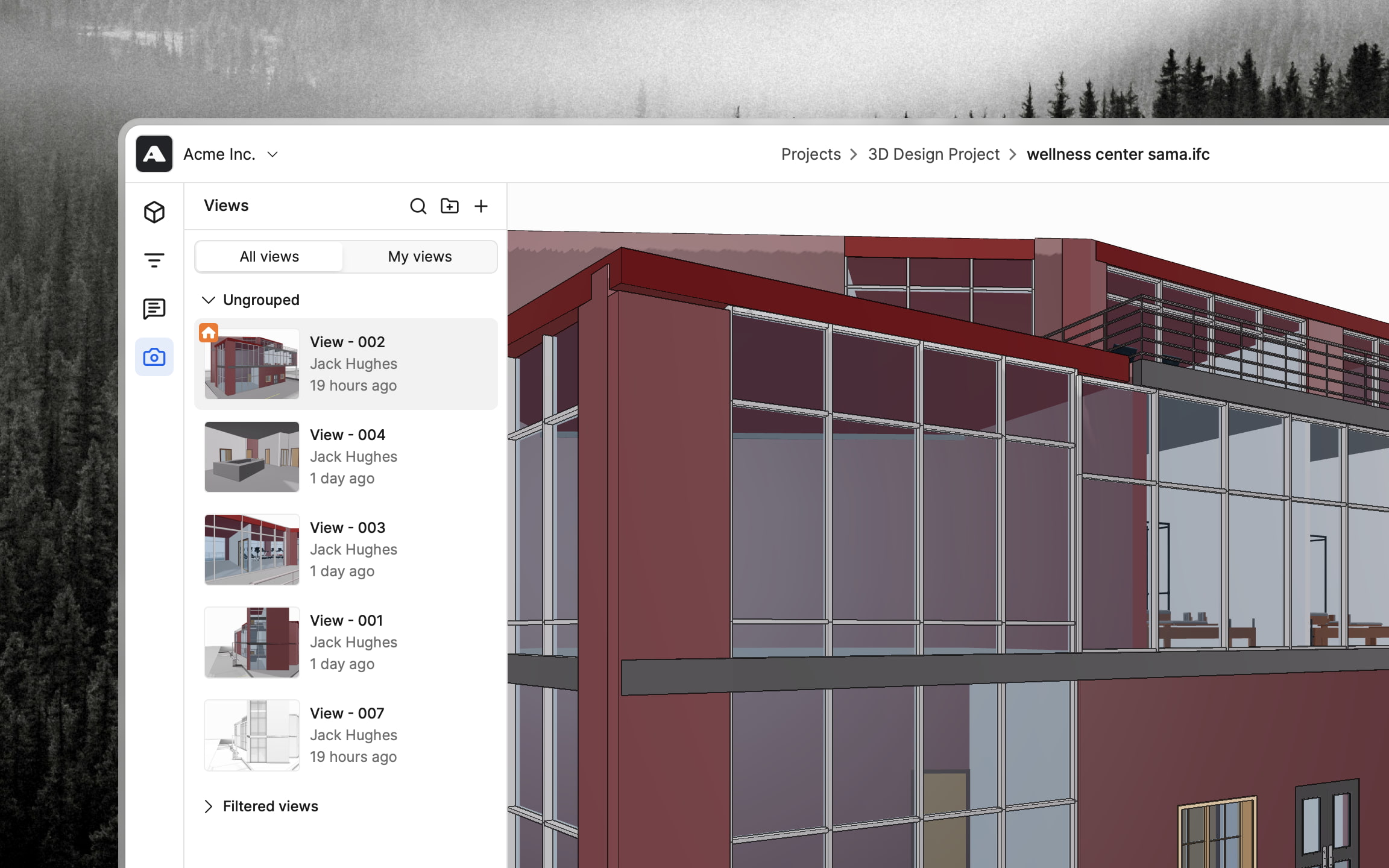
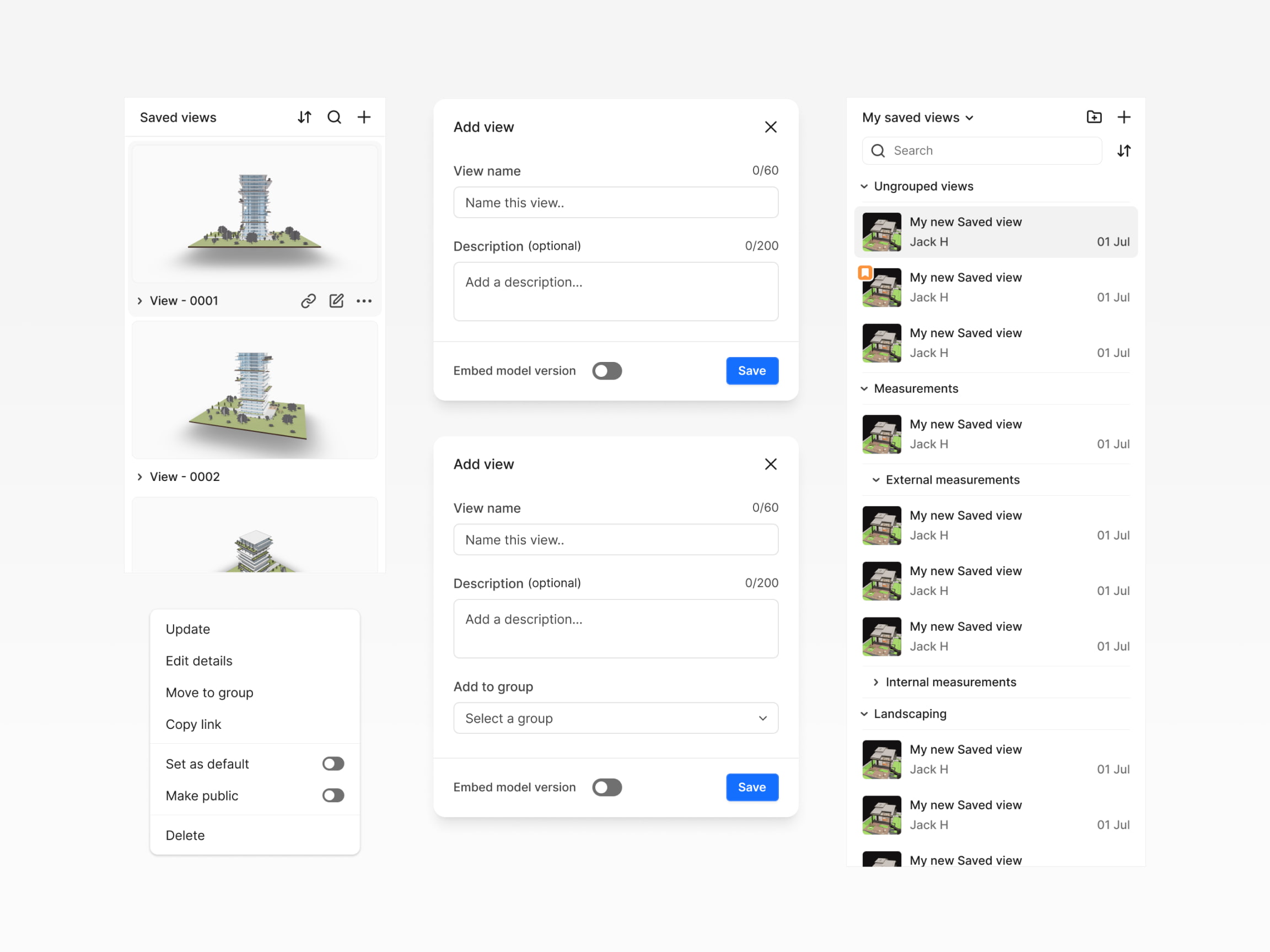
Saved Views had to account for users with different roles and permissions, and views that could be organised into groups.
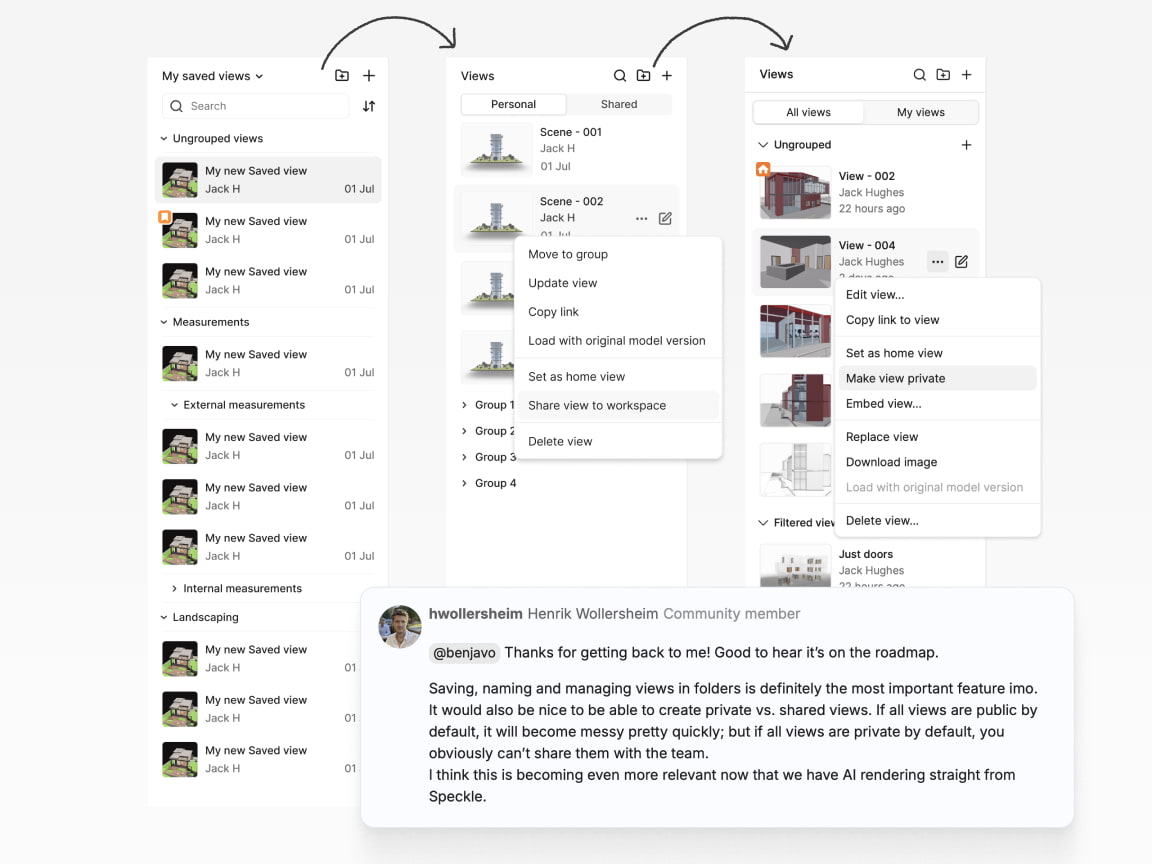
The exploration led to two clear decisions: views are shared by default, and groups are limited to a single level.
Removing friction
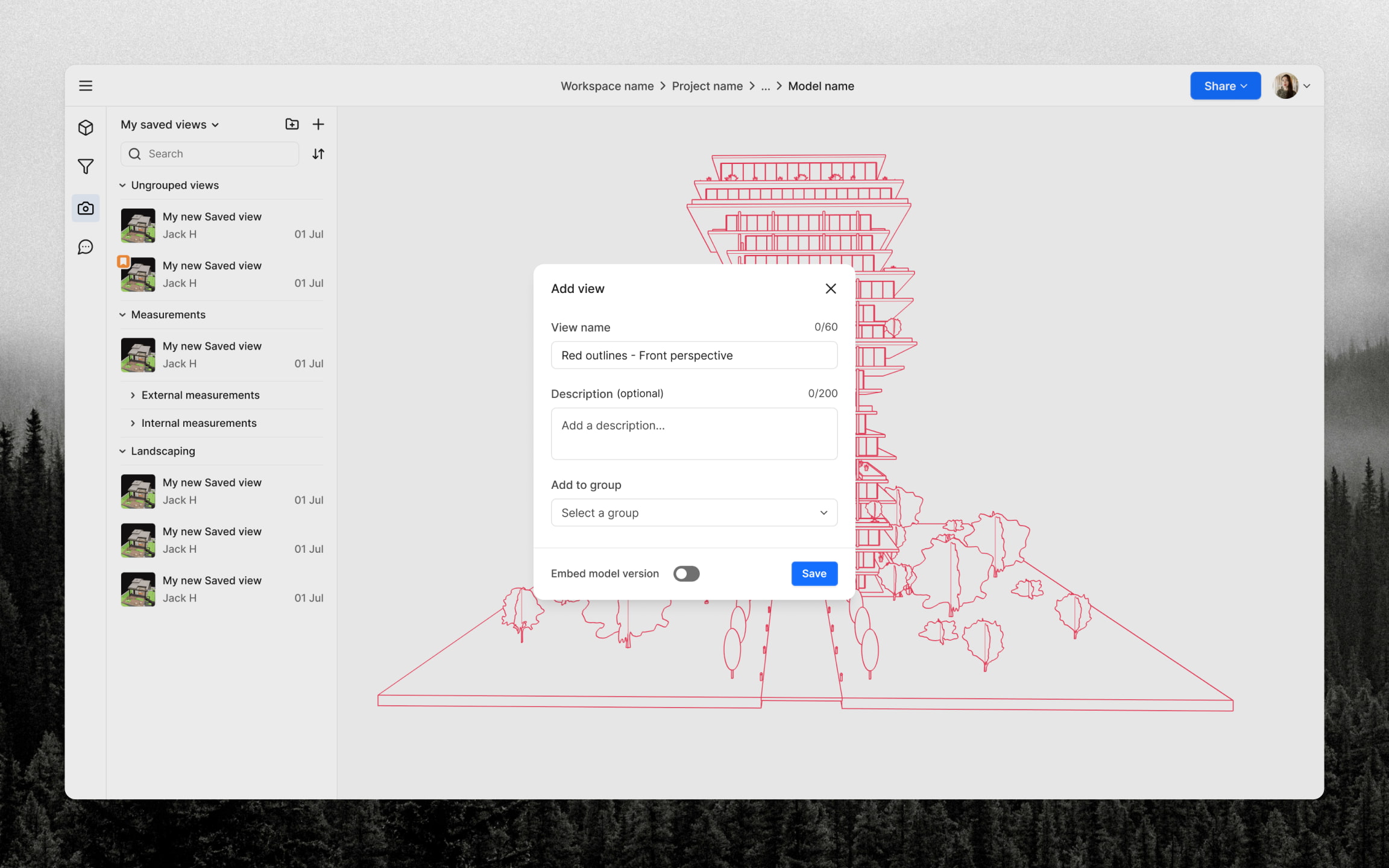
Feedback on early prototypes made it clear that creating a view needed to feel effortless. It would have been technically simpler to use a modal upfront, but that felt too disruptive to broader workflows.
The solution was to remove that friction entirely. Views are created instantly with a default name, with an edit modal available afterwards for keeping things organised.
04 — Collaboration
Closing the gap
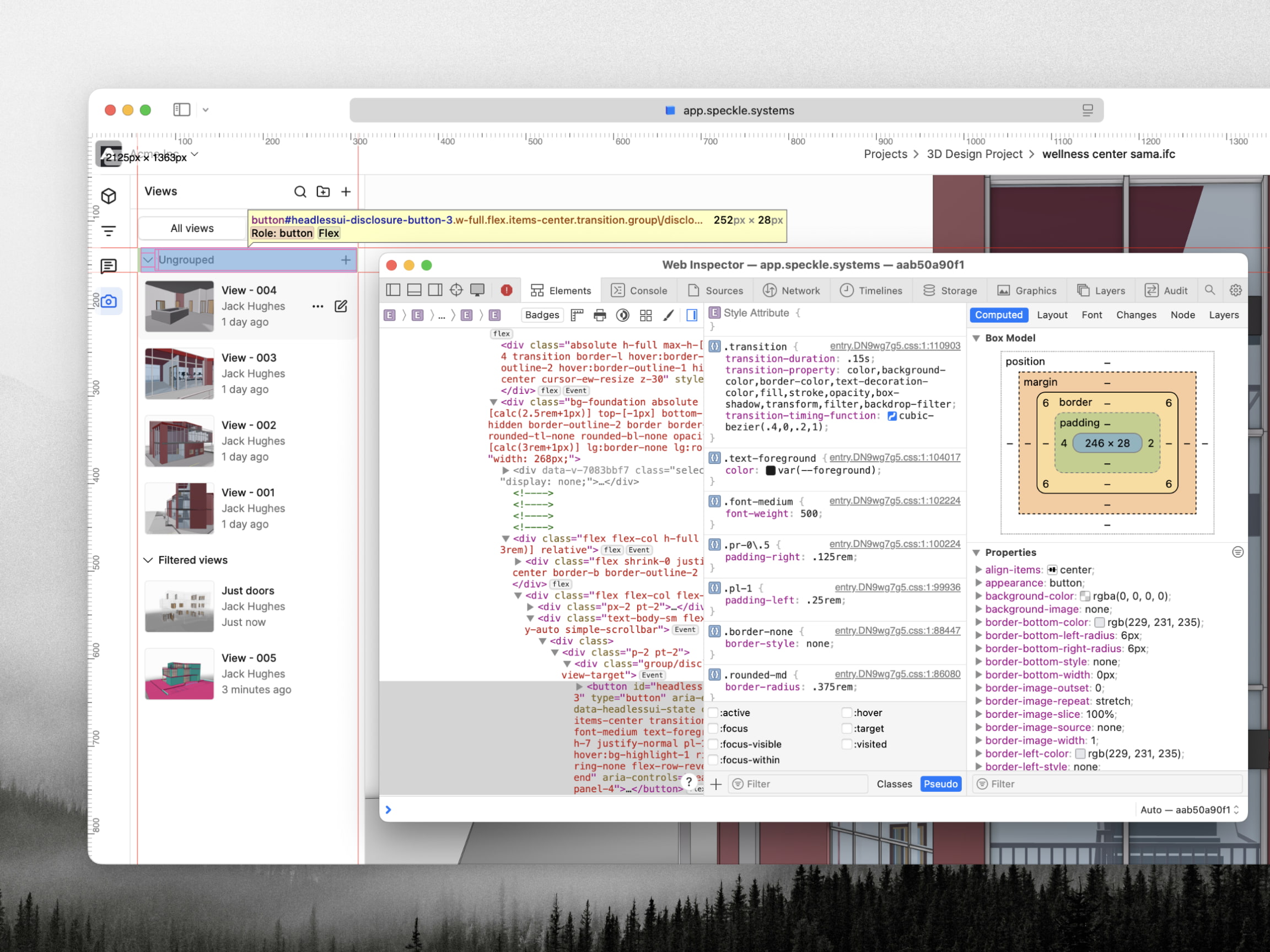
Once the core functionality was in place, I worked directly in the codebase to make it feel the way it was designed to.
This included enriching the disclosure UI component to support a new variant, without breaking the existing instances.
It was also the moment we switched to Lucide, an icon library I had been pushing for.
05 — Outcomes
A detail that mattered
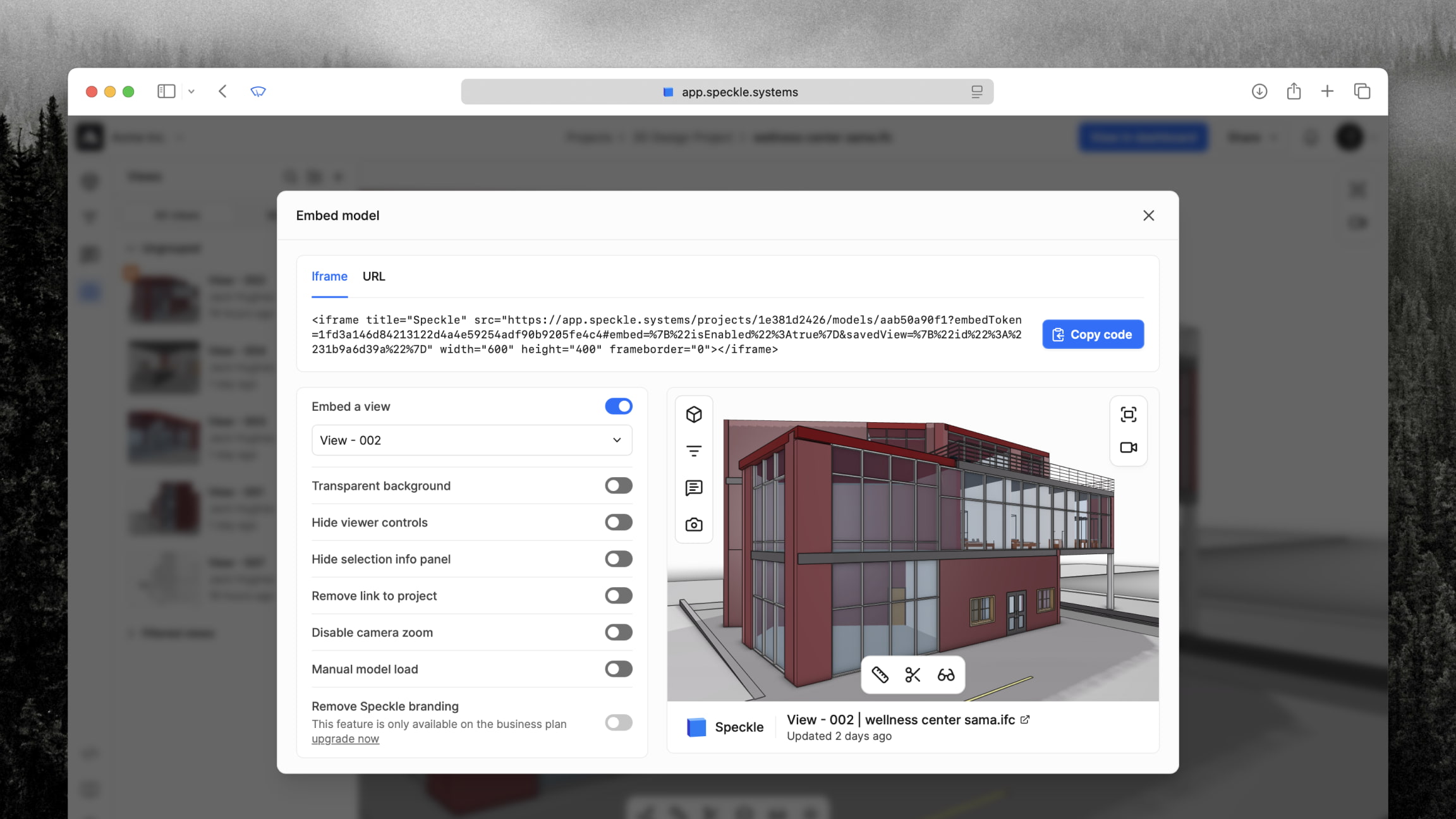
Embedding interactive 3D models into Miro boards was already a favourite feature for teams.
With Saved Views in place, embedded models could now open to a specific, curated perspective rather than the default state.
A little enhancement that made a popular use case a lot more useful.
Setting up foundations
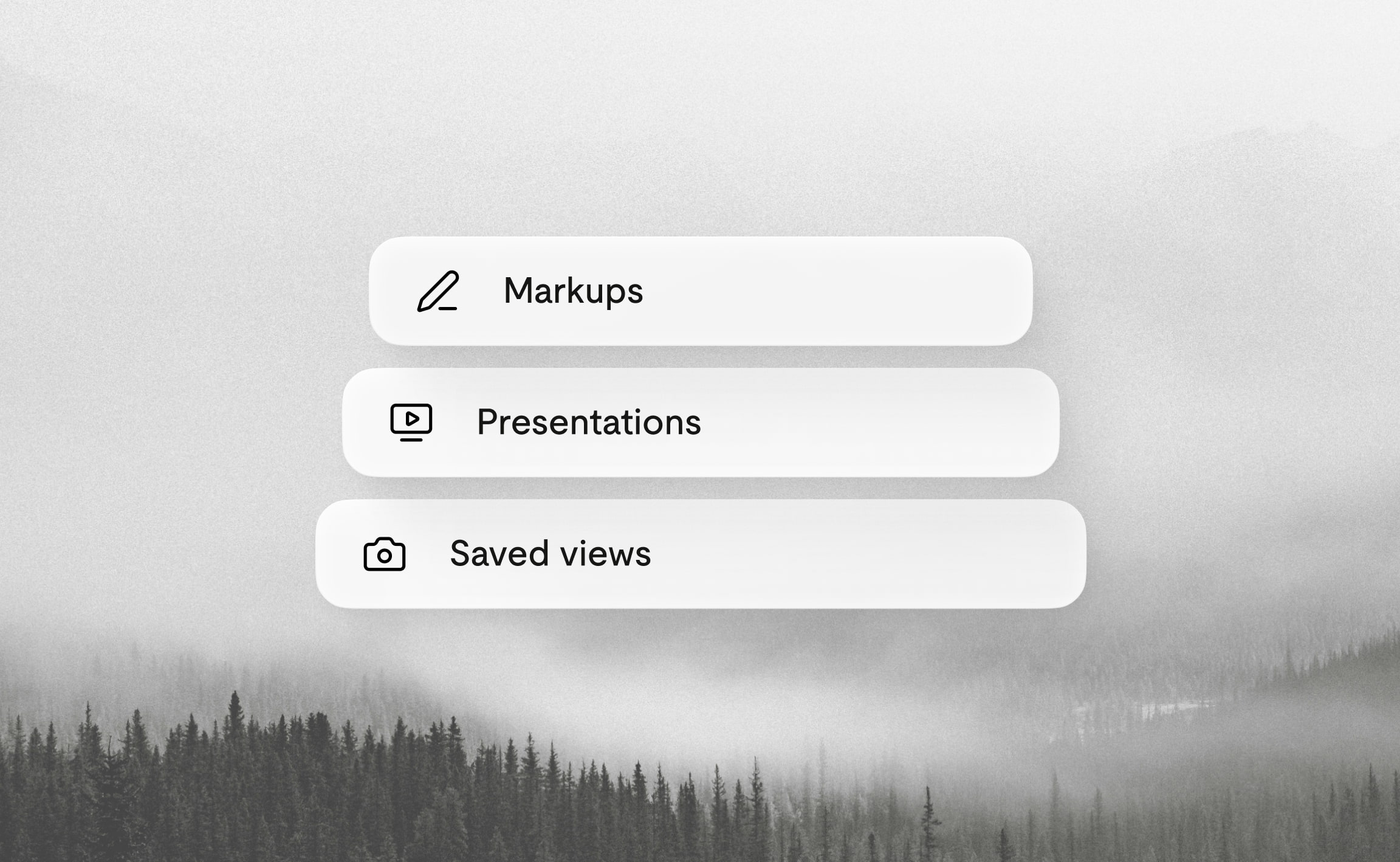
Saved Views became the building block for future features.
Presentations let teams compile a collection of views into an easily shareable narrative, viewable by anyone, no membership required.
Then came Markups, allowing users to draw directly on top of a view for quick async feedback from project directors.
A payoff that wasn’t instant
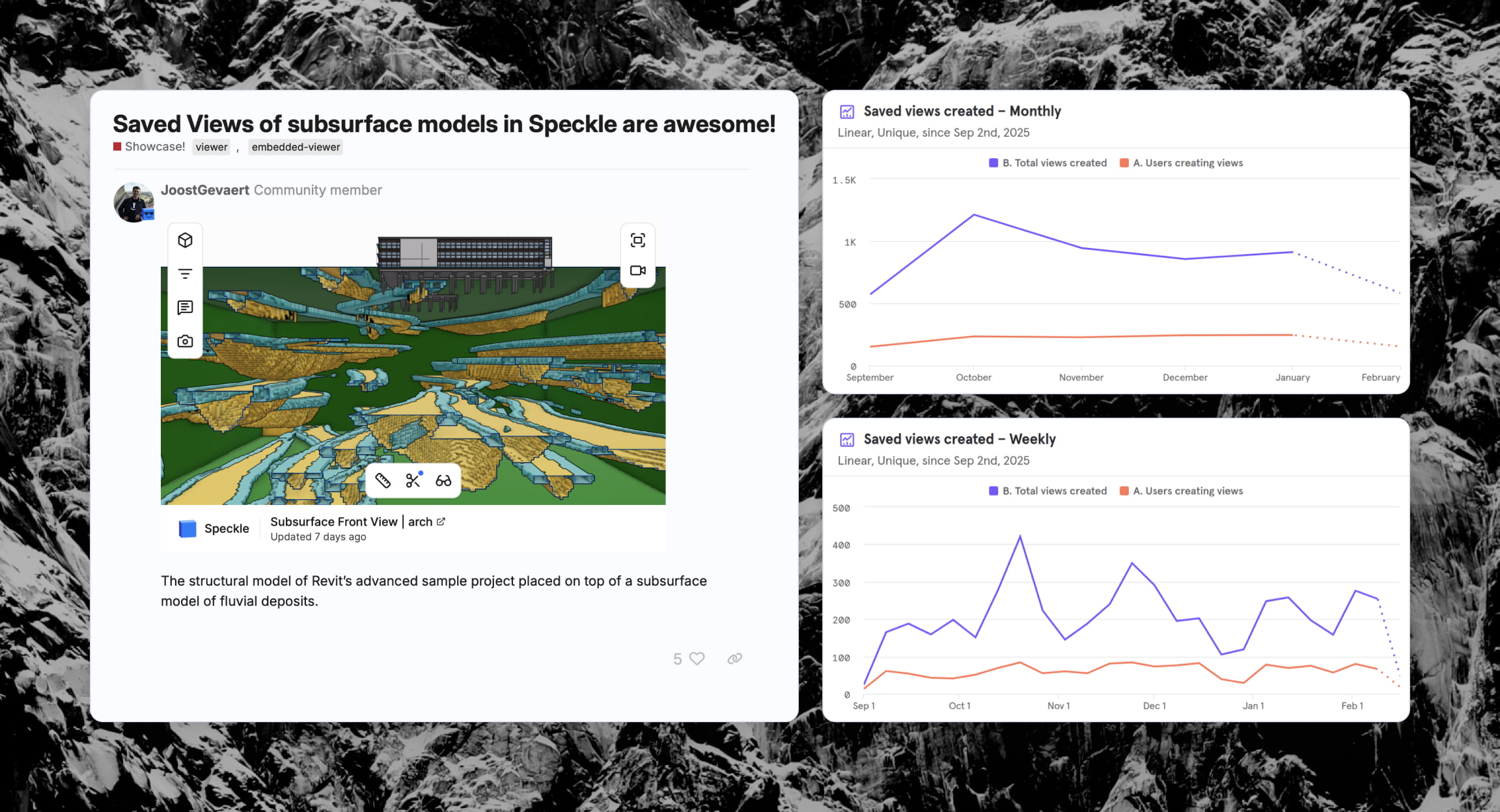
User responses were positive, and we tracked adoption via Mixpanel.
What we found was that the feature alone didn't move the needle on paid seat conversion in the way we'd hoped.
It may be that Saved Views needs more time as part of the broader collaborative design review initiative to reach its potential.